
Horse 'Equus'
From: Equestrian And Horse
See also: Horse Behaviour • Horse Gaits
Horse Markings • Horse Types
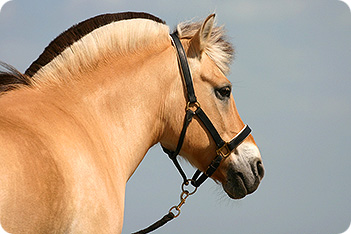
The Horse 'Equus'
Horses are beautiful, gentle and complex animals who require a great deal of respect, care and understanding. Modern day horses are also known as Equus Caballus and form part of the Equidae family which also includes Zebras and Donkeys.
Horses are herbivorous animals with four legs and hooves, they have several gaits available to them which allows the horse to cover a wide range of terrain as well as the ability to cover many miles at speed.
Horses have a mane along their necks which can vary in thickness and length and tail at the base of the spine.
Horses come in many different shapes and sizes depending on the type and breed of horse that they are as well as coming in a huge range of colours and markings, making each animal completely unique.
Pre-History Evolution Of The Horse
The 'Dawn Horse' or 'Eohippus' is where the horse that we know today has over the last 55 million years evolved from. Eohippus started out the size of a small dog and lived in the forests, it had four toes on its forefeet and three toes on its hind feet. Over the years the horses size, shape, legs, diet and hooves were all to gradually to change. After Eohippus came Mesohippus then Merrychippus followed by Pliohippus and then onto the hoofed Equus that we know today.
More About Horse Evolution
History Of The Horse
By 2000 BC horses had become domesticated and have been used throughout history up to present day, not only for riding, sport and leisure purposes but also for work under harness in the fields, forests, canals and the towns.
- Horses In Work
Working horses have been used over the years both under saddle and in harness.- Horses were used by hunters to enable them to keep up with and therefore catch there prey.
- War horses were ridden into battle.
- Post horses were used to deliver the mail, they needed speed and endurance.
- Mining ponies were used in the coal mines, they needed to be small, strong and have immense stamina.
- Barge horses were used to tow the barges along the canals.
- Carriage horses were the original taxi and bus service.
- Horses under harness were also used for pulling trams.
- Police horses are still in use today and can be seen on patrol in many areas all over the world.
- Horses were and still are used for ploughing fields.
- Park rangers often use horses as a means of accessing difficult terrain.
- Prison wardens used to patrol the outskirts of Dartmoor prison.
- Horses are used for clearing timber in forests.
- Riding school horses are still patiently teaching equestrians all over the world.
- Horses In Sport
There are many equestrian sports available for the rider and spectator to enjoy.- Non jumping sports can include endurance riding, dressage, barrel racing, reining, gymkhana, driving, vaulting, hacking and showing.
- Jumping sports can include eventing, show jumping, hunter trials, team chasing and steeple chasing. o Ball sports can include polo and horse ball.
More About Horse Competitions
Horse Types
Horses can be categorised into three groups, which depending on what breed they are will make them either fit into the Warm bloods, Cold Bloods or Hot Bloods category.
- Cold Bloods
Cold bloods are well known for being gentle and calm in nature as well as being highly intelligent. They are immensely strong and stocky in conformation and are well suited to work under harness, often being used for working in the fields, forests and in towns. As well as being very intelligent cold bloods can also be used under saddle. - Hot Bloods
Hot bloods are extremely agile and quick thinking, they often have a slim profile with fine mane, tail and coats due to the hot climates that they are from for example the Arabian. - Warmbloods
The warmblood is a cross between the hot blood and the cold blood with the end result giving a intelligent, quick thinking and agile horse with immense power.
More About Horse Types
Horse Colours And Markings
Horses can come in a variety of different colours with different markings on there legs, bodies and face, giving each horse its own individual look.
More About Horse Colours| Horse Markings
Horse Gaits
Horses has several gaits which allows the horse to travel for many miles over varied terrain often which great stamina and speed. The slowest pace is the walk, in this pace the horse moves each leg one at a time in even, rhythmical succession. The next pace up is the trot, in the trot the horse moves two diagonal pairs of legs at the same time to give a clear two beat rhythm. In the canter the horse places its feet in an even three beat rhythm with one of the hind legs striking off to initiate the canter and its diagonal leg being the leading leg or the last leg to go down to form a stride. The fastest pace is the gallop, which is a four time pace and it is during the gallop that there is a clear moment of suspension.
More About Horse Gaits
Horse Breeds
There are many different breeds of horse each with its own unique physique, behavioural traits and talents. Horses have been bred for and have adapted to their surroundings all over the world, for example the Arab breed is sleek in appearance with a fine coat, mane and tail able to cover many miles and deal with the hot desert climate that it originated from. The Shetland pony is by contrast a great deal smaller and develops a thick coarse coat, mane and tail in the winter to protect it from the harsh weather conditions that the Shetland Isles have to offer.
More About Horse Breeds
Horse Behaviour
The horse has developed through the years with a strong sense of instinct and at the first sight of danger these follow the fright and flight technique as a herd animal. However horses behaviour is best shown with their own individual character and in many cases they have a sense of humour wether they are in work, rest or play.
More About Horse Behaviour

Equestrian and Horse • The Equestrian • The Horse 'Equus' • Equestrian News • Horse Tack • Horse Care
Equestrian Clothing • Horse Riding • Horse Worming • Horse Training • Horse Bits • Riding Holidays
Horse Shows • Horse Videos • Riders • Equine Art • Books • Directory • Site Map • Contact Us
© 2012 Equestrian and Horse
