
Horse Bits
Horses Bridle Bits
From: Equestrian and Horse Riding Tack
See Also: Bit Fitting • Snaffle • Gag • Pelham • Double Bits
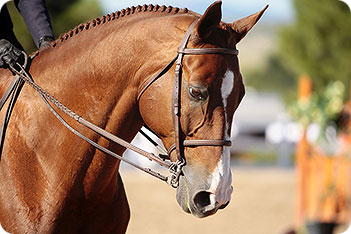
Horse Bits
Bits allow the rider to communicate with the horse as to direction, bend, pace, speed, amount of engagement and give general overall control.
There are five main types of bit and they all effect the horse in different ways by acting on different areas of the horses head.
Which ever bit is chosen, the horses level of training must also be considered along with any past injuries or sensitivities in the mouth itself.
Types Of Bit:
Where Bits Affect The Horse:
- Corners Of The Mouth
The gag, pelham, double and snaffle bits such as the french link bit, all affect the corners of the horses mouth. - Bars Of The Mouth
Gag, curb, pelham, and snaffle for example a Eggbutt snaffle bits all rest upon the bars of the lower jaw in the area between the molars and the incisors. - Tongue
Gag, curb, snaffle, double and pelham for example a jointed pelham bits all apply pressure to the upper surface of the horses tongue. - Side Of The Face
Snaffles for example a Fulmer snaffle have protruting sides that can extend up and down the face and come into action when rein pressure is applied. - Chin Groove
The curb groove is situated at the base of the horses chin with bits such as pelhams and curbs that use a curb chain acting in this area. - Horses Nose
Bitless for example the Hackamore apply pressure to the front of the horses nose. Certain nosebands such as the Kineton noseband can also be used in conjunction with a bit to apply nose pressure. - Poll
Gag or Curb for example a Balding gag. Pressure is applied to the horses poll via the headpiece on the bridle. This type of pressure occurs when a bit such as a curb bit, pelham or gag is used. - Roof Of Mouth
A bit with a ported mouthpiece for example a high port correction bit, will afect the roof of the horses mouth.
Materials:
- Stainless Steel
Long lasting and silver in appearance. - Cupro Nickel And German Silver
Light gold in color, the taste encourages the horse to relax and salivate. - Copper
This causes the horse to relax and salivate in its mouth due to the warming nature of the metal. - Sweet Iron
Gives the horse a sweet pleasant taste in its mouth and encourages salivation. - Rubber and Plastic
These are gentle and flexible in design.
Bit Sizes
Horse bit sizes are measured by taking the distance between the two bit rings in either centimeters or inches:
Inches |
Centimeters |
|
| 3 | 7.5 | |
| 3.5 | 9 | |
| 4 | 10 | |
| 4 1\4 | 10.5 | |
| 4 1\2 | 11.5 | |
| 4 3\4 | 12 | |
| 5 | 12.5 | |
| 5 1\4 | 13 | |
| 5 1/2 | 14 | |
| 5 3\4 | 14.5 | |
| 6 | 15 |
Either measure an existing bit that your horse wears or put on your horses head-collar and with someone holding them get a piece of string approximately 9 inches long. Gently pressing on the bars of there mouth and when they open carefully holding the string at both ends insert into the mouth to where the bit should sit up at the corners of the mouth, move your fingers to where the bit rings will go, then keeping hold of the string remove it from the horses mouth and mark on the string where you were holding it,you now need to allow quarter to half an inch to this measurement to allow for the bit to sit clear of the lips and corners and then measure the total distance.
Fitting A Bit
The shape and size of the horses mouth and type of bit chosen will need to be carefully considered to ensure that the bits action will be able to work effectively and be comfortable for the horse to wear.
More About Bitting Considerations, Fitting Bits And Curb Chains
Varieties Of Curb Chain
All curb chains should have a lip strap which passes through the fly ring on the curb chain or through the fly ring on the chain covering, this secures the curb chain in position.
- Single Link Chain
Fairly strong in its design as the chain acts directly on the chin groove. - Double Link
Quite strong in design as the curb acts directly on the chin groove. - Elasticated Curb Chain
Mild in its action due to the flexibility of the curb chain the pressure applied is not that strong. - Leather Curb Chain
Mild in its action - Rubber Covered Curb Chain
Mild in its action due to the rubber softening the action of the chain.
History
Horse bits have come a long way since their humble early days where they consisted of little more than pieces of horn, wood, bone raw hide and rope. It was during the Iron Age that horse bits progressed to use metal which obviously had a much greater life span but were a long way off the bits we know today with one of the early styles consisting of a large ring that went through the horses nose, but this offererd little by way of control and so the focus moved towards the horses mouth instead.
From this point onwards bits would start to develop into the shape and styles that we see today. During the early years however there were some incredibly severe bits which would have inflicted great pain if used, such bits would often have had excessivily long curbs and high ported mouthpieces that one could only imagine the damage that would of been inflicted if inproperly used or otherwise.
During the Middle Ages the bits used were strong and practical in order to provide the knights with maximum control when in battle and it was not until the Renaissance period the appearance changed with bits becomming much more ornate.
Bits have now developed to such a degree that they can now offer a shape that is more anatomically correct, with a wide range of materials available to aid the horses way of going and with a great deal more thought put into the horses needs, the effect and general action of the bits themselves.
Bits and bridles used today are of a much higher standard and although there are a few bitting exceptions the majority of bits and bridles about when used in the hands of a well trained horse and rider can and should allow minimal pressure to be used.

Equestrian and Horse • The Equestrian • The Horse 'Equus' • Equestrian News • Horse Tack • Horse Care
Equestrian Clothing • Horse Riding • Horse Worming • Horse Training • Horse Bits • Riding Holidays
Horse Shows • Horse Videos • Riders • Equine Art • Books • Directory • Site Map • Contact Us
© 2012 Equestrian and Horse
