
Types Of Horse Feed
Horse Feed Supplements
From: Horse Feeding And Nutrition
See Also: Horse Nutrition | Rules Of Feeding | Horse Care
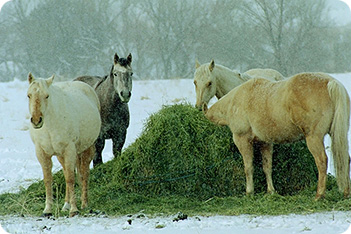
Horse Nutrition
Every horse requires food and water in order to survive, and the amount of feed and water will vary depending on the amount of work being done, the age of the horse, the condition they are in and the climate.
Nutrition Groups
The correct quantity of protein, fats, carbohydrates, water, fibre, vitamins and minerals need to be carefully calculated to provide your horse with a well balanced diet that will match their needs.
Feed Types And Preparation
The different categories of feed are cereals, protein feeds, bulk feeds, compound feeds and forages.
- Cereals
These are energy giving feeds which have been treated to reduce the amount of starch that is present in them and to make them more digestible for the horse. Such treatments include rolling, boiling, micronisation and extrusion. Oats, Barley and Maize are all examples of cereals fed to horses. - Protein Feeds
With the exception of milk pellets, protein feeds come from plants such as soya, beans, peas and linseed. - Bulk Feeds
Bran, chaff and sugar beet are used to fill out feeds. - Compound Feeds
Mixtures of cereals, protein feeds and bulk feeds. They can be tailored to suit the individual for example a coarse mixes can be high in fibre or high in protein. - Forages
Types Of Feed
- Fibre Nuts
These are primarily a high fibre, low starch, low sugar and non heating grass nuts. There are many different types of grass nut on the market such as conditioning cubes which can offer your horse condition without excitability. Fibre nuts can be used as a partial hay replacer, in treat balls and can be fed soaked soaked for horses and ponies with dental issues. - Oats
Oats are a high fibre feed suitable for horses in medium work and if fed appropriately are not usually overheating as they are also low in starch, although there are exceptions. Covered in an outer husk they come either naked, rolled, bruised or crushed which makes them easier to digest. Oats are high in phosphorus low in calcium and should therefore be used in conjunction with either sugar beet, Alfalfa or a calcium supplement. - Barley
Barley is suitable for horses needing weight gain and energy, it is low in calcium, high in phosphorous and lacks vitamins A and D so needs to be fed in conjunction with sugar beet or Alfa A for example. Given to the horse either flaked, rolled, crushed or micronized which makes them more digestible. Barley is high in energy but low in fibre and can be overheating due to its high starch content which when it gets broken down converts to glycogen then to glucose giving it a higher energy content than oats. - Maize
Maize is a very heating feed with a high fibre and starch content that should therefore be fed carefully. Maize is often found either flaked or micronized in many of the coarse mixes. - Bran
By product of the milling process of wheat,which is high in phosphorous and low in calcium and so great care must be taken when feeding it. A calcium supplement should be fed with it such as limestone flour or alfalfa. - Linseed
Linseed is often used to improve coat condition, weight gain and is a source of energy. It is the product of the Flax plant which must be carefully prepared as it is poisonous if not prepared correctly as is usually micronized. - Sugar Beet
By product of the sugar extraction industry. Careful preparation needs to be undertaken before feeding to prevent the sugar beet from swelling up in the horses stomach. Sugar beet is high in calcium, sugar, energy and fibre and low in phosphorus. Sugar beet can be very appetizing for fussy eaters is easily digestible and can be molassed and unmolassed. - Chaff
Chaff is a mix of some or all of the following; grass, straw, alfalfa, molasses, rapeseed oil and is often used to help horses chew their feed and slow their eating down. Chaff can be used as a partial hay replacer is often palatable, high in fibre and usually has a broad spectrum of vitamins and minerals added. There are also low sugar options available. - Molasses
By product of sugar, which adds energy and palatability to feeds. - Coarse Mix
Coarse mixes are a complete feed often containing some or all of the following; barley, maize, peas, naked oats, oil, vitamins, minerals, fibre nuts and molasses. Compound feeds put together for a specific category of horse, such as high energy competition mixes, low starch mixes, yearling mixes, brood mare mixes and so on. Calculated to provide all the necessary ingredients in a balanced form. Care must be taken to choose the appropriate mix for the individual horse as mixes can range from high fibre non heating to those with a high starch and subsequent high energy content. - Beans and Peas
High in protein and energy especially lysine. - Haylage
Hay that has been sealed into bags immediately after harvest and left so that fermentation takes place, this process preserves the natural ingredients and quality of the grass Haylage therefore offers a dust free alternative to soaking hay. Care must be taken to check the bags for tears prior to opening and haylage must be used within three days of opening. - Hay
Can be either meadow hay or seed hay. It should be clean and sweet smelling, avoid dusty, black and moldy hay. Meadow hay can vary in quality depending on which grasses there are available in the field that has been cut. The Rye grass in seed hay is higher in protein but due to the lateness in the time that it is cut it can be less digestible.
Specialist Feeds
- Milk Pellets
Contain Calcium - Limestone
High in Calcium, it is used to balance out bran or added to diets requiring more calcium. - Soya Oil
Given to increase stamina and body weight. Rich in Linoleic acid and Omega 6 fatty acids. - Garlic
Aids the repertory and digestive system as well as having antibiotic properties. - Biotin
Aids in keeping the horses hooves, coat and skin healthy. - Mint
Aids in digestion and as a tasty treat to encourage fussy eaters. - Cider Vinegar
Aids in good health and joint suppleness, it contains Potassium, phosphorous, sodium, calcium and iron. - Cod Liver Oil
Supple joints with a healthy coat and shine. - Msm
Methylsulphonylmethane is present in plants, it has to be added to the horses feed because it is destroyed in production. It is added to improve the general health of the horse, the immune system, hair and hooves, respiratory system, mobility of the joints of the horse. - Herbs
Can be given to help improve the horses immune, respiratory, and digestive systems, as well as helping with calming, hormonal, mobility and pain relief. Herbs include Echinacea Pallida, Echinacea Purpurea, Cats Claw, Cider Vinegar, Devils Claw, Marshmallow Root, Chamomile, Aniseed, Licorice Root, Black Cohosh, Rosemary, Comfrey leaf and Buckwheat. These herbs will be dried and packaged ready to be directly placed into the feed. Different blends will help with certain ailments so read the labels carefully. - Pre Biotic
Product that promotes the growth of certain bacteria within the horses large intestine. - Pro Biotic
Product which aids the natural gut flora of the small intestine. - Dietary Supplement
Provides missing nutrients that are required in the horse diet, such as vitamins, minerals, fatty acids and amino acids. - Glucosamine
This is made from glucose and amino acid called glutamine which is required for regeneration of tendon, bone, ligament, hair, cartilage and skin. Products with glucosamine in therefore help to fight against degeneration within the horse. - Carrots, Apples And Swedes
These are given to brighten up feeds and provide something extra tasty as a treat or reward. - Electrolytes
Made up of sodium, potassium, calcium, magnesium, chloride, phosphate and hydrogen carbonate. Usually administered as a powder which is added to either water or feed they act to replace the primary ions that the horse may have lost during strenuous exercise or extremes of heat.

Equestrian and Horse • The Equestrian • The Horse 'Equus' • Equestrian News • Horse Tack • Horse Care
Equestrian Clothing • Horse Riding • Horse Worming • Horse Training • Horse Bits • Riding Holidays
Horse Shows • Horse Videos • Riders • Equine Art • Books • Directory • Site Map • Contact Us
© 2012 Equestrian and Horse
